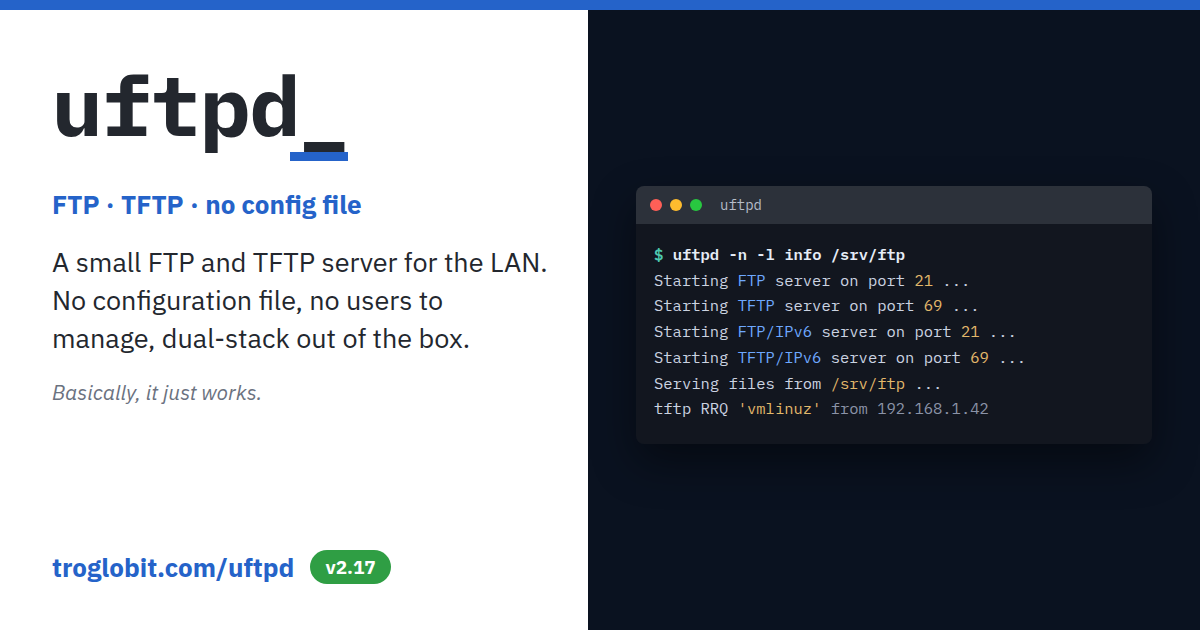
uftpd is a small FTP and TFTP server for the LAN. No configuration file and no users to manage: it serves the ftp user's home directory, from inetd or as a standalone daemon.
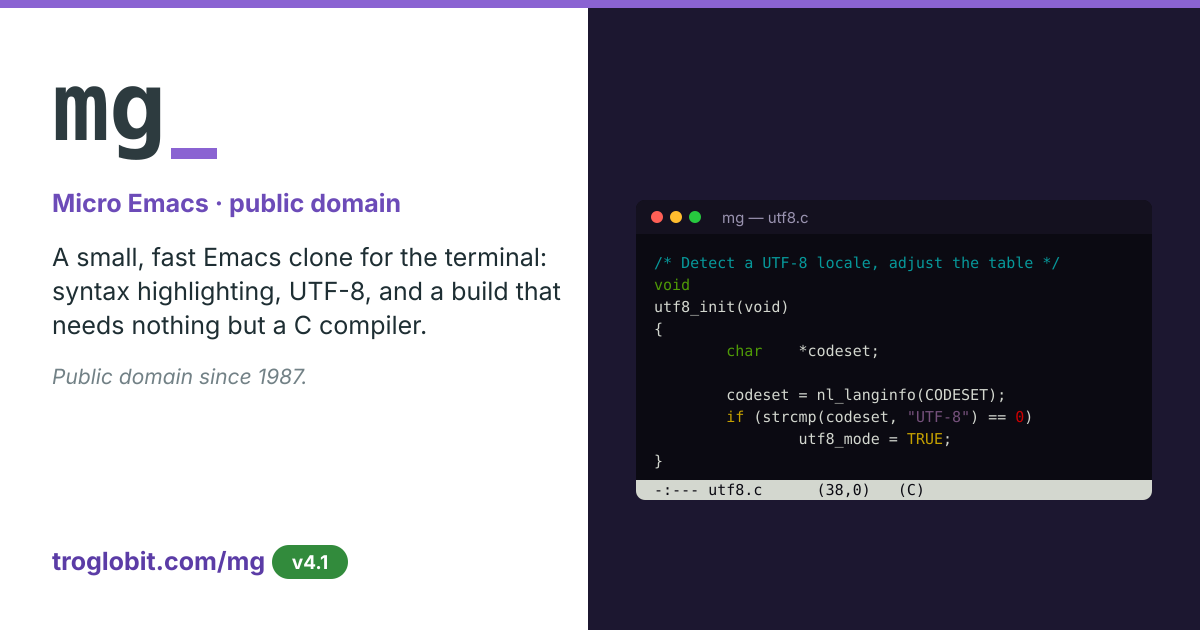
mg is a small, fast, and portable Emacs-like editor with syntax highlighting and UTF-8 support, descended from MicroEMACS by way of OpenBSD, and in the public domain.
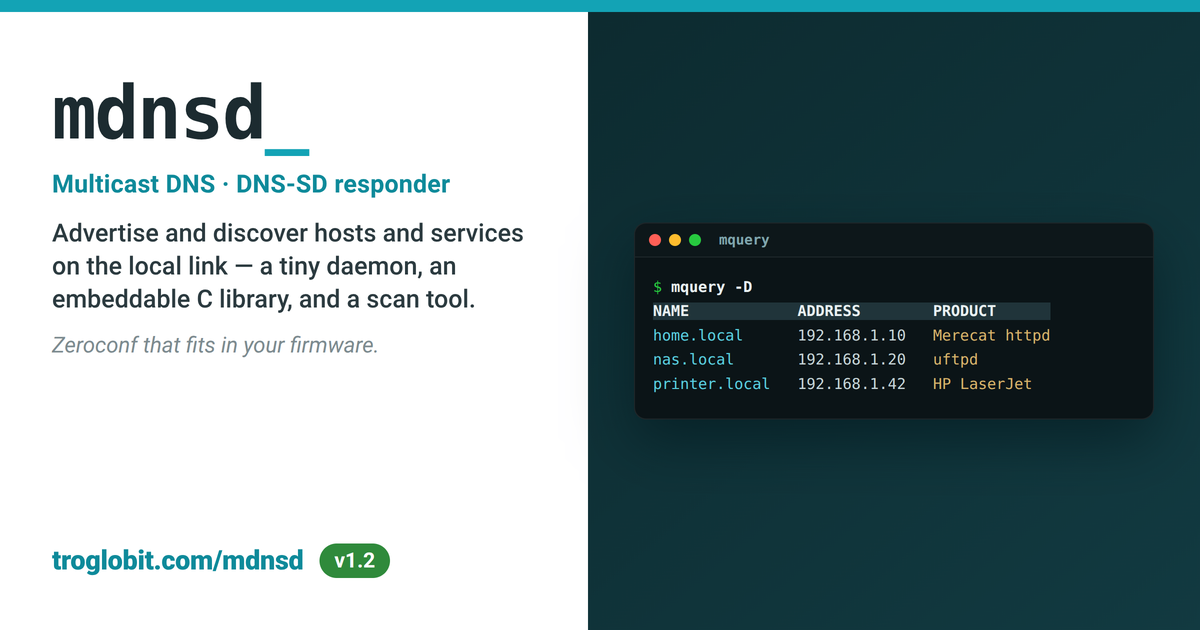
mdnsd is a small Multicast DNS and DNS-SD (service discovery) responder and library for advertising and discovering hosts and services on the local link.
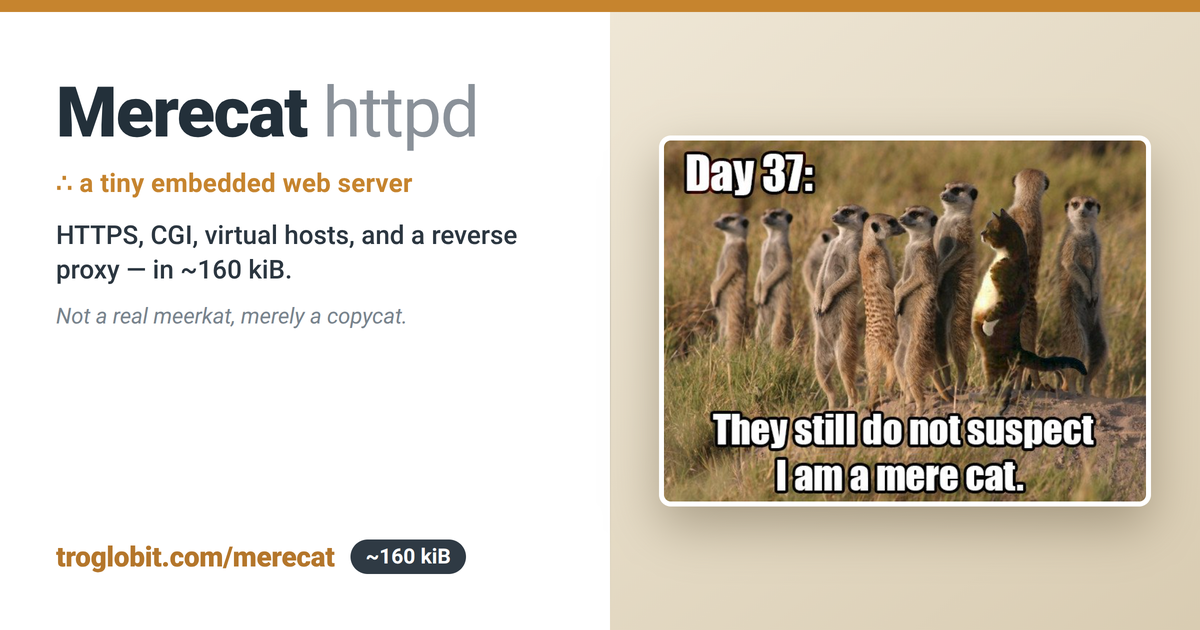
Merecat httpd is a tiny embedded web server forked from thttpd -- HTTPS, CGI, virtual hosts, and a reverse proxy in a ~160 kiB footprint.
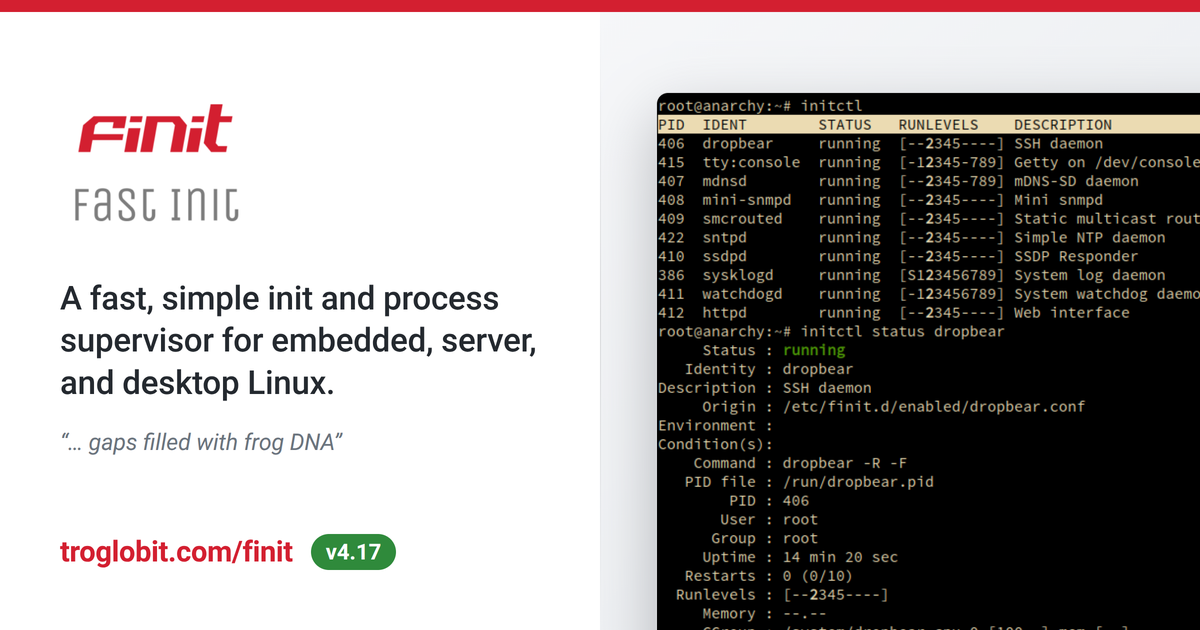
Finit is a fast, simple init and process supervisor for embedded, server, and desktop Linux -- an alternative to SysV init and systemd, reverse engineered from the EeePC fastinit.
This is a line editing library for UNIX. It can be linked into almost any program to provide command line editing and history. It is call compatible with the FSF readline library, but is a fraction of the size (and offers fewer features).
The small size (<30k), lack of dependencies (no ncurses needed!) and the free license should make this library interesting to many embedded developers seeking a replacement for the GNU readline library.
This is an SNMP server for small and embedded systems, currently Linux and FreeBSD are supported. It is easily portable to other UNIX systems since it’s written in C. A stripped binary is ~80 kiB and comes nowhere near the feature set of Net-SNMP, so it has a very low impact on system resources — a good fit for routers, NAS boxes, and other embedded devices.
See my mini HowTo: Playing with SNMP for a quick introduction to setting up the SNMP tools and MIBs to avoid having to use numerical OIDs.
Nemesis is a command-line network packet crafting and injection utility for UNIX-like and Windows systems. Well suited for testing Network Intrusion Detection Systems, firewalls, IP stacks and a variety of other tasks. As a command-line driven utility, it is perfect for automation and scripting.
Nemesis can natively craft and inject ARP, DNS, ETHERNET, ICMP, IGMP, IP, OSPF, RIP, TCP and UDP packets. Using the IP and the Ethernet injection modes, almost any custom packet can be crafted and injected.
In-a-dyn is a small and simple Dynamic DNS, DDNS, client with HTTPS support. It is commonly available in many GNU/Linux distributions, used in off-the-shelf routers and Internet gateways to automate the task of keeping your DNS record up to date with any IP address changes from your ISP. It can also be used in installations with redundant (backup) connections to the Internet.
Presentation here.
Example The configuration file on most systems is in /etc/inadyn.
watchdogd(8) is an advanced system and process supervisor primarily intended for embedded Linux and server systems. It supports “kicking” multiple watchdog timer (WDT) devices and can also monitor critical system resources, supervise the heartbeat of processes1 and record process deadline transgressions.
Read more about Built-in Monitors in the extended documentation.
The configuration determines how the daemon acts on monitored resources and supervised processes. See watchdogd.conf(5) for how to set up watermarks and trigger external scripts to suit your particular setup.