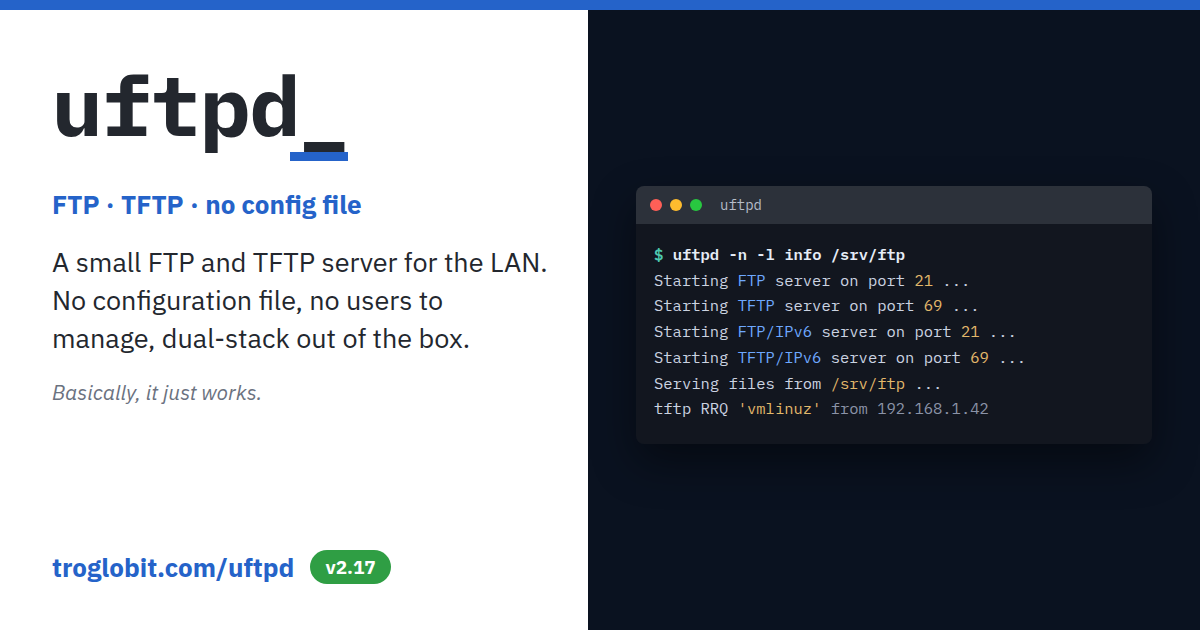
uftpd is a small FTP and TFTP server for the LAN. No configuration file and no users to manage: it serves the ftp user's home directory, from inetd or as a standalone daemon.
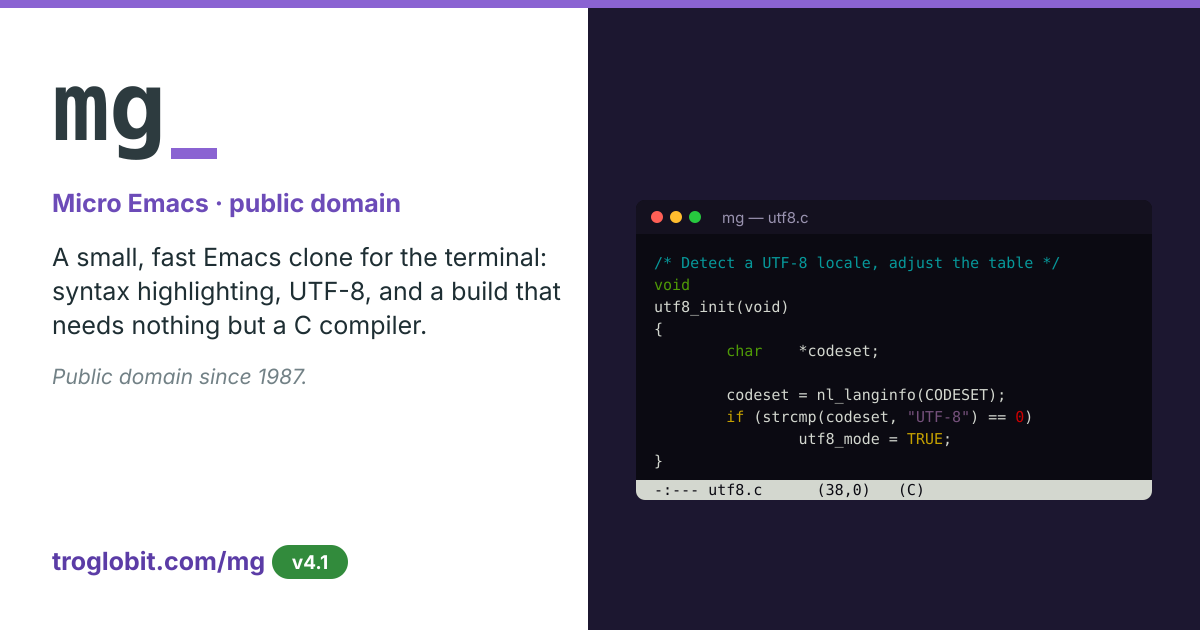
mg is a small, fast, and portable Emacs-like editor with syntax highlighting and UTF-8 support, descended from MicroEMACS by way of OpenBSD, and in the public domain.
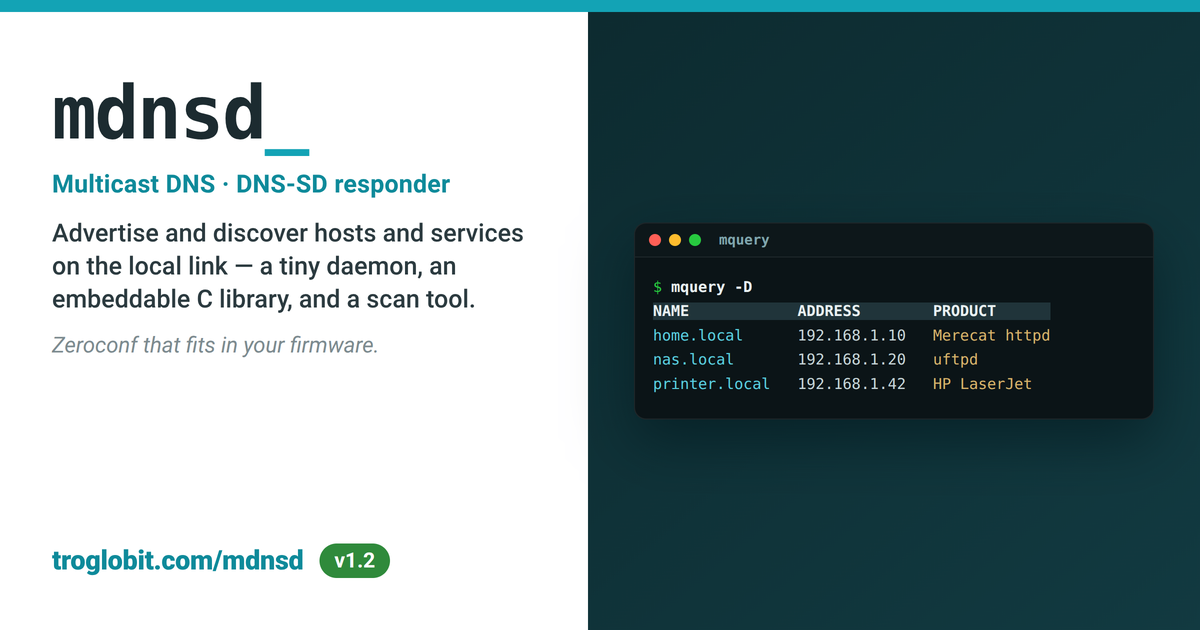
mdnsd is a small Multicast DNS and DNS-SD (service discovery) responder and library for advertising and discovering hosts and services on the local link.
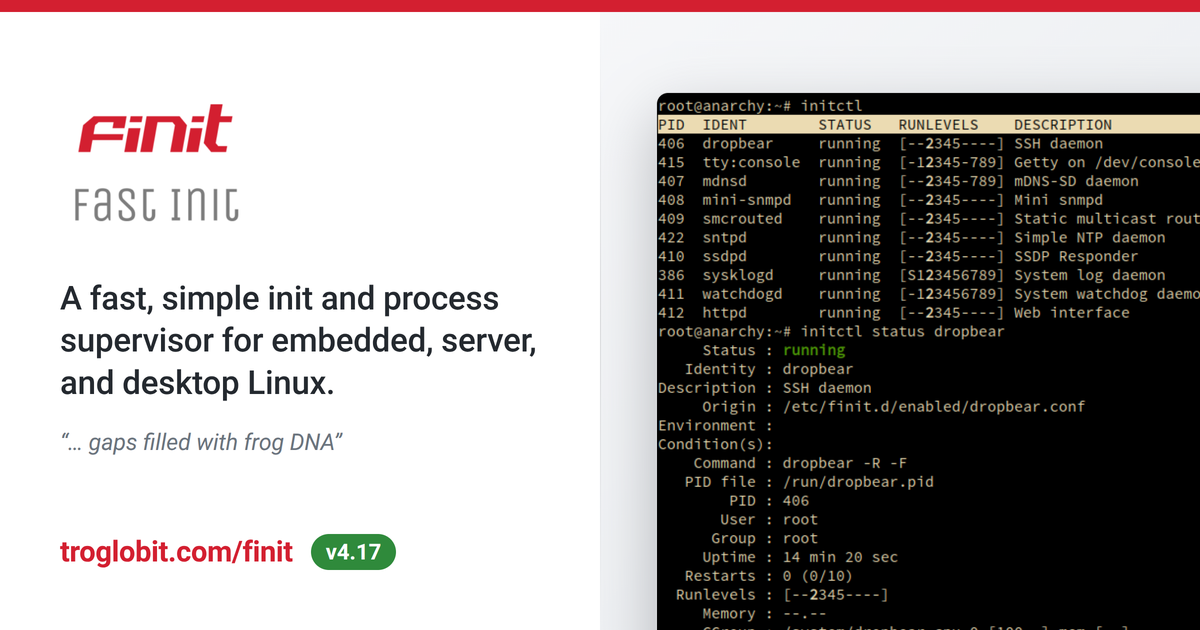
Finit is a fast, simple init and process supervisor for embedded, server, and desktop Linux -- an alternative to SysV init and systemd, reverse engineered from the EeePC fastinit.
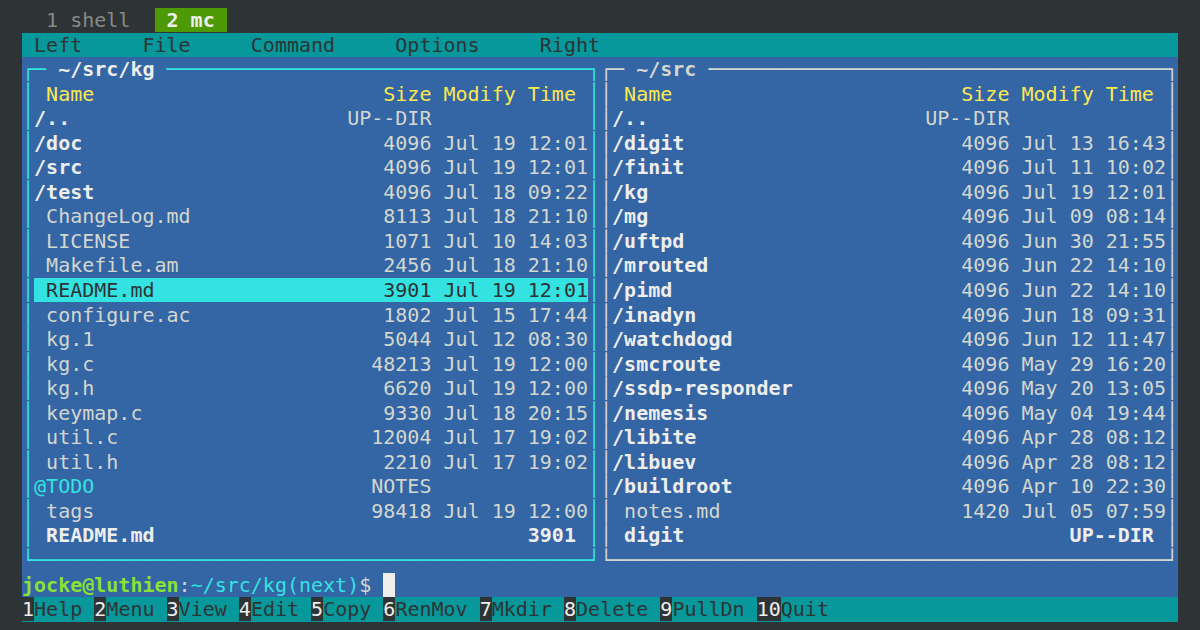
Mockup of rxvt new look, running Midnight Commander.
I want to test the editors I maintain, kg and mg, on as many
terminals as possible, and after bouncing between xterm, GNOME Terminal,
kitty, Alacritty and Terminator over the years, rxvt is the
one I keep coming back to – mostly for how far it bends to a plain
config file. So here’s how I set it up with a few sane defaults, or at
least how far I got …
The following writeup is part of my series; Reminders to self.
Please let me know if there’s anything you’d like me to delve
further into.
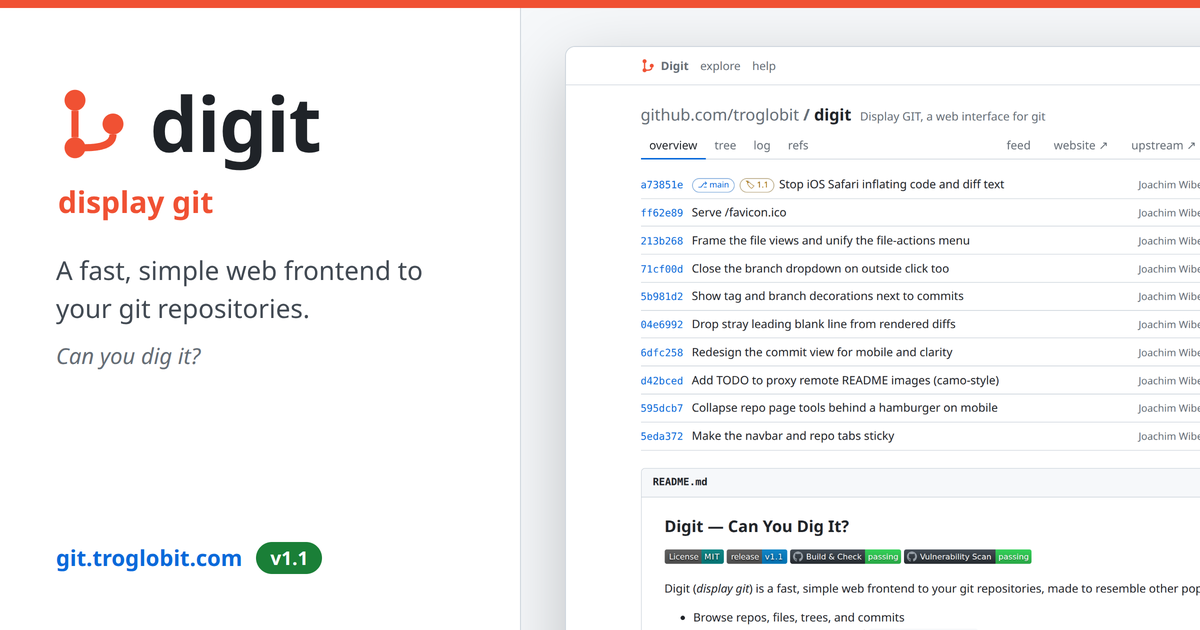
Like many of you I keep mirrors of my projects on a small VPS —
partly as insurance, GitHub is lovely until it isn’t, and partly
because I like having my own corner of the web. For years gitweb
did the honors, showing its age but doing the job. When I went
looking for something nicer I found legit, which looks great —
but on my single-core droplet it pegged the CPU just rendering a
repo page. Add the AI scraper herds that graze on every public git
frontend these days, and the poor machine never had a quiet moment.
This mini HowTo describes how to use the SNMP client tools to retrieve human readable information from devices running an SNMP daemon. In the examples below mini-snmpd is used as the daemon and as client both the command line net-snmp tool and the snmpB GUI are used.
Personally I use both Ubuntu and Debian, so the tools I use to download the clients will reflect that. See your respective UNIX distro’s help pages for how to install these client tools in your operating system.
This is a line editing library for UNIX. It can be linked into almost any program to provide command line editing and history. It is call compatible with the FSF readline library, but is a fraction of the size (and offers fewer features).
The small size (<30k), lack of dependencies (no ncurses needed!) and the free license should make this library interesting to many embedded developers seeking a replacement for the GNU readline library.
This is an SNMP server for small and embedded systems, currently Linux and FreeBSD are supported. It is easily portable to other UNIX systems since it’s written in C. A stripped binary is ~80 kiB and comes nowhere near the feature set of Net-SNMP, so it has a very low impact on system resources — a good fit for routers, NAS boxes, and other embedded devices.
See my mini HowTo: Playing with SNMP for a quick introduction to setting up the SNMP tools and MIBs to avoid having to use numerical OIDs.